A moonphase watch is more than a timekeeping instrument: it is a miniature mechanical representation of one of nature’s most fascinating cycles. Combining astronomical principles with traditional watchmaking expertise, this complication translates the moon’s changing phases into an elegant indication on the dial.
How does a moonphase mechanism work, and why does it continue to fascinate watch enthusiasts? From its historical origins to the engineering behind different lunar displays, this guide explores the mechanics, design and craftsmanship that define the moonphase watch.
What Is a Moonphase Watch?
A moonphase watch is a timepiece equipped with a complication that shows the moon’s current phase as observed from Earth. Unlike the hours, minutes and seconds, this function provides an additional indication based on the lunar cycle.
The lunar cycle is commonly divided into eight principal phases:
- new moon
- waxing crescent
- first quarter
- waxing gibbous
- full moon
- waning gibbous
- last quarter
- waning crescent
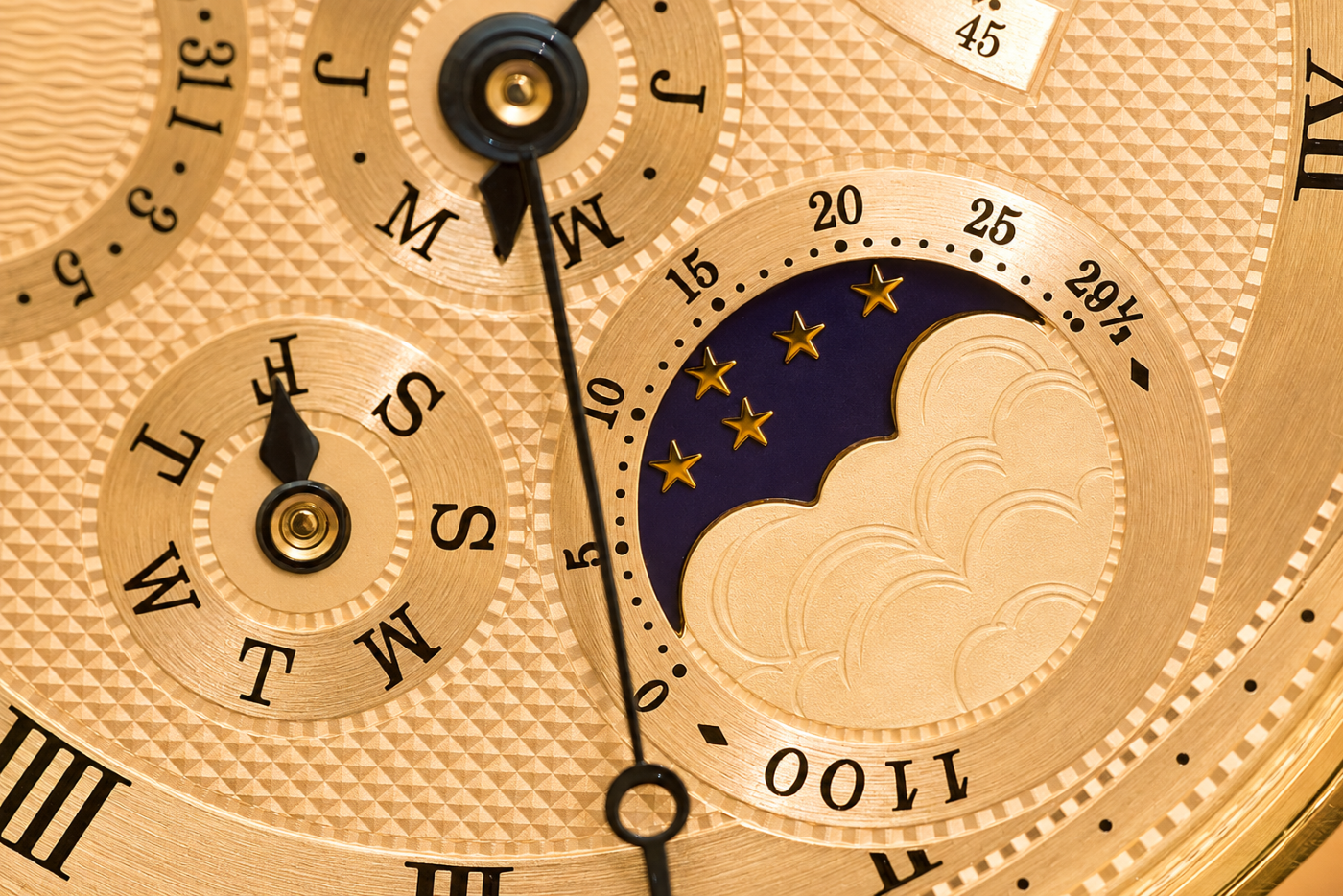
A traditional moonphase display represents this progression through a rotating disc, usually visible through a window in the dial.
The history of astronomical timekeeping stretches back centuries. Ancient instruments demonstrated how interconnected gears could represent celestial movements. This tradition continued through astronomical clocks and pocket watches before becoming an elegant feature of mechanical wristwatches.
Today, the moonphase complication remains a distinctive element of fine watchmaking, valued for its combination of:
- mechanical ingenuity
- astronomical significance
- visual appeal
How Does a Moonphase Mechanism Work?
A traditional moonphase watch relies on a gear train that converts the passage of time into the gradual movement of a lunar disc. In the most common construction, a disc bearing two moon images rotates beneath the dial, revealing the changing phases through a shaped aperture.
A conventional mechanism typically uses a 59-tooth wheel that advances by one tooth every 24 hours. With two moon images on the disc, one complete rotation represents approximately 59 days, corresponding to two simplified lunar cycles of 29.5 days each.
The average interval between two successive new moons, known as the synodic month, is approximately 29.53 days. Because the conventional mechanism simplifies this cycle, a small discrepancy gradually accumulates. A typical 59-tooth moonphase mechanism requires correction by approximately one day every two years and eight months, although the exact interval depends on its construction.
More sophisticated mechanisms use refined gear ratios to reproduce the lunar cycle more accurately. Depending on the calibre, some high-precision moonphase displays are designed to accumulate a deviation of only one day over more than a century. Such figures refer to the theoretical accuracy of the lunar indication rather than the overall timekeeping accuracy of the watch.
Although the principle is relatively straightforward, its implementation demands precision. The gear train and the movement must work together to ensure that the indication advances correctly. Moonphase functions can be incorporated into:
- Quartz watches
- Manual-winding mechanical watches
- Automatic mechanical watch movements, drawing energy from the mainspring
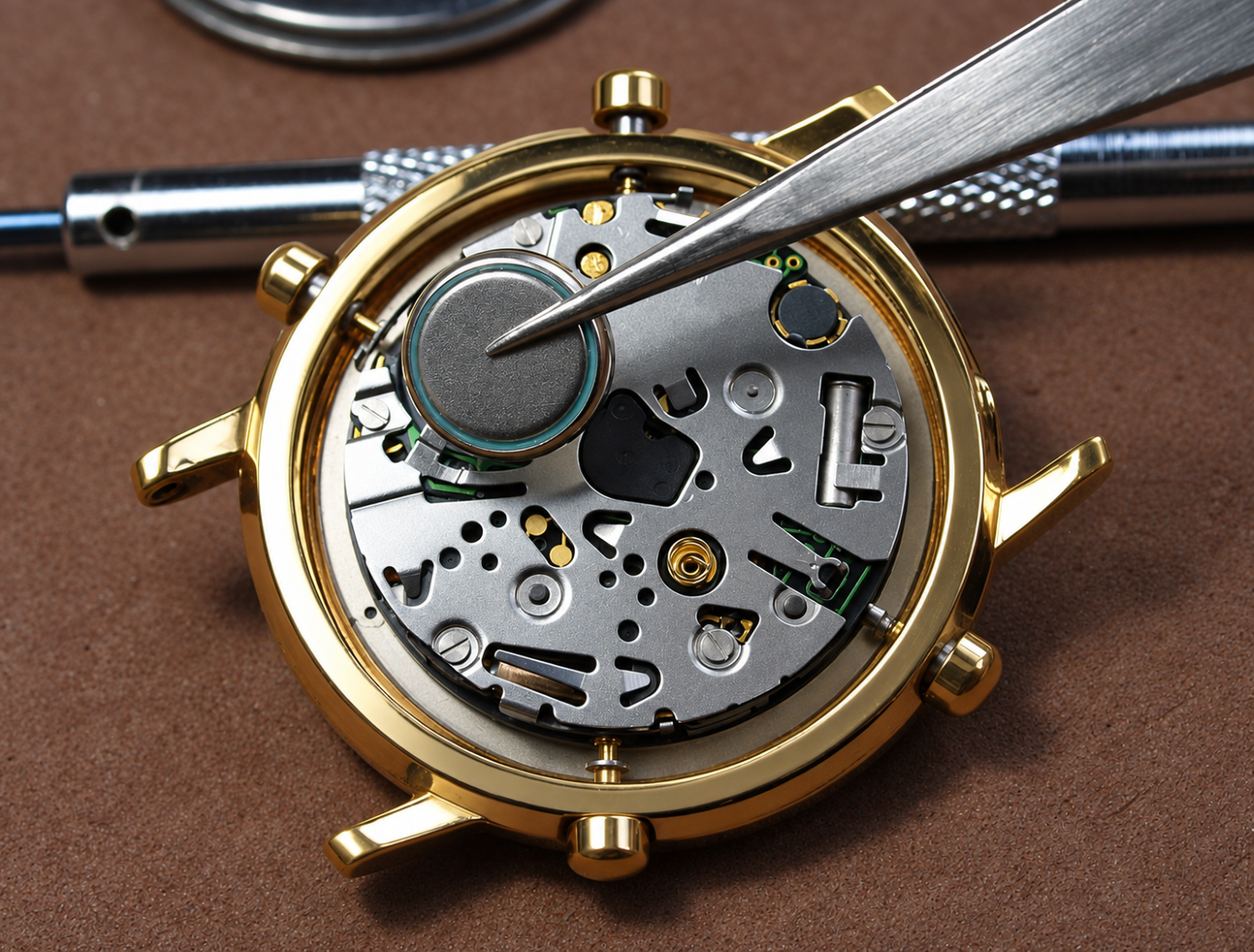
The mechanism’s performance also depends on the precise assembly and integration of the movement and dial. These operations form part of the wider watch production process, where technical expertise and meticulous execution of a watch manufacture contribute to the quality of the finished timepiece.
Disc vs Spherical Moonphase Displays: What Are the Differences?
Moonphase displays can take several forms. The most familiar construction uses a flat rotating disc, while some designs employ a three-dimensional spherical element. Each approach has its own technical and aesthetic characteristics.
Disc moonphase
The disc moonphase is the established solution. A flat disc rotates beneath the dial, revealing the lunar image through a window. Its compact construction makes it suitable for integration into a wide variety of movements.
Depending on the watch, the moonphase may be displayed through:
- a semicircular window
- within a dedicated subdial
The contrast between the moon, the surrounding night sky and the dial also creates opportunities for decorative artistry, from engraved details to finely finished surfaces.
Spherical moonphase
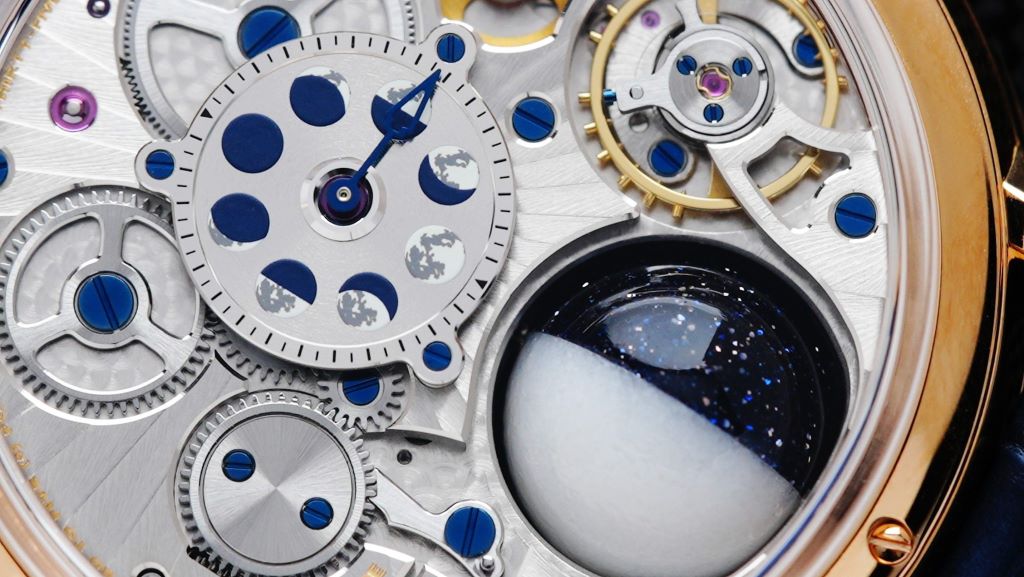
A spherical moonphase display uses a three-dimensional element to represent the moon. Rather than relying exclusively on a flat image, the spherical component introduces depth and a more sculptural appearance.
Its visual impact depends on the materials, surface treatment and surrounding dial architecture. The construction must also accommodate the component’s dimensions and movement, making integration dependent on the specific calibre.
Spherical displays are less common than conventional discs, but they illustrate how a traditional astronomical function can inspire alternative approaches to mechanical and aesthetic design.
Neither approach is inherently superior in every respect. The disc offers a more compact solution, while the sphere offers a more sculptural interpretation of the lunar display. The choice ultimately reflects the watchmaker’s technical objectives and creative vision.
Moonphase watches and other complications
The moonphase complication becomes particularly interesting when combined with other mechanical functions. Each additional indication requires careful coordination within the movement, as well as thoughtful dial design to preserve readability.
One of the most natural combinations is the perpetual calendar, which accounts for different month lengths and leap years. Paired with a moonphase display, it brings calendar information and the lunar cycle together in a single timepiece.
A chronograph provides another possibility, adding elapsed-time measurement to the lunar indication.
In more ambitious constructions, the complication may be combined with a tourbillon, a mechanism that places the regulator watch and regulating organ inside a rotating cage. Originally developed to compensate for positional rate variations in pocket watches, the tourbillon watch remains a distinctive feature of traditional mechanical watchmaking.
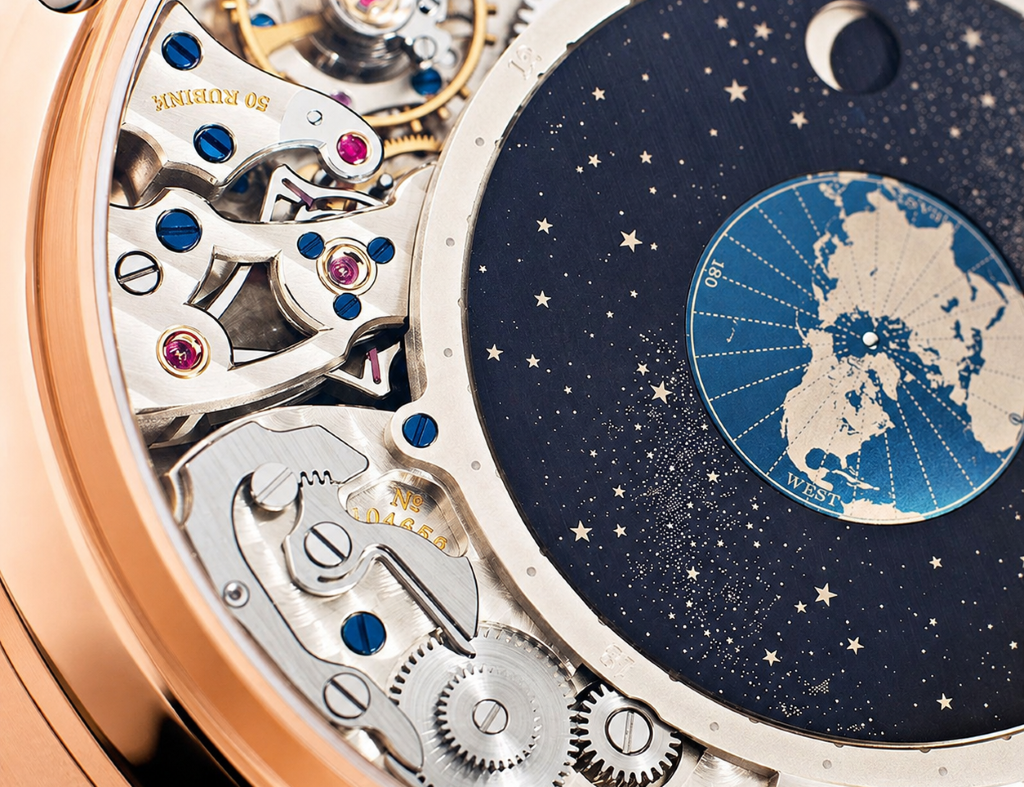
Another example is the world time complication, which displays the time across multiple time zones and is particularly useful for international travelers. Although world time and moonphase indications serve different purposes, both demonstrate how additional complications can extend a watch beyond basic timekeeping.
In every case, the goal is not merely to add functions, but to integrate them in a way that preserves reliable operation, clear indications and a coherent design.
Conclusion
A moonphase watch brings together astronomical knowledge, mechanical engineering and the enduring tradition of fine watchmaking. By translating the lunar cycle into a mechanical display, it offers a distinctive expression of the relationship between time measurement and the natural world.
From the geometry of the gearing to the finishing of the dial, every detail shapes the character of the finished timepiece. Whether expressed through a traditional rotating disc or a more elaborate three-dimensional construction, the moonphase complication continues to inspire watchmakers to explore new ways of combining precision, craftsmanship and visual appeal.
Its enduring fascination lies in this balance between purpose and expression: a sophisticated mechanical function that transforms the movement of the moon into an elegant indication on the wrist.