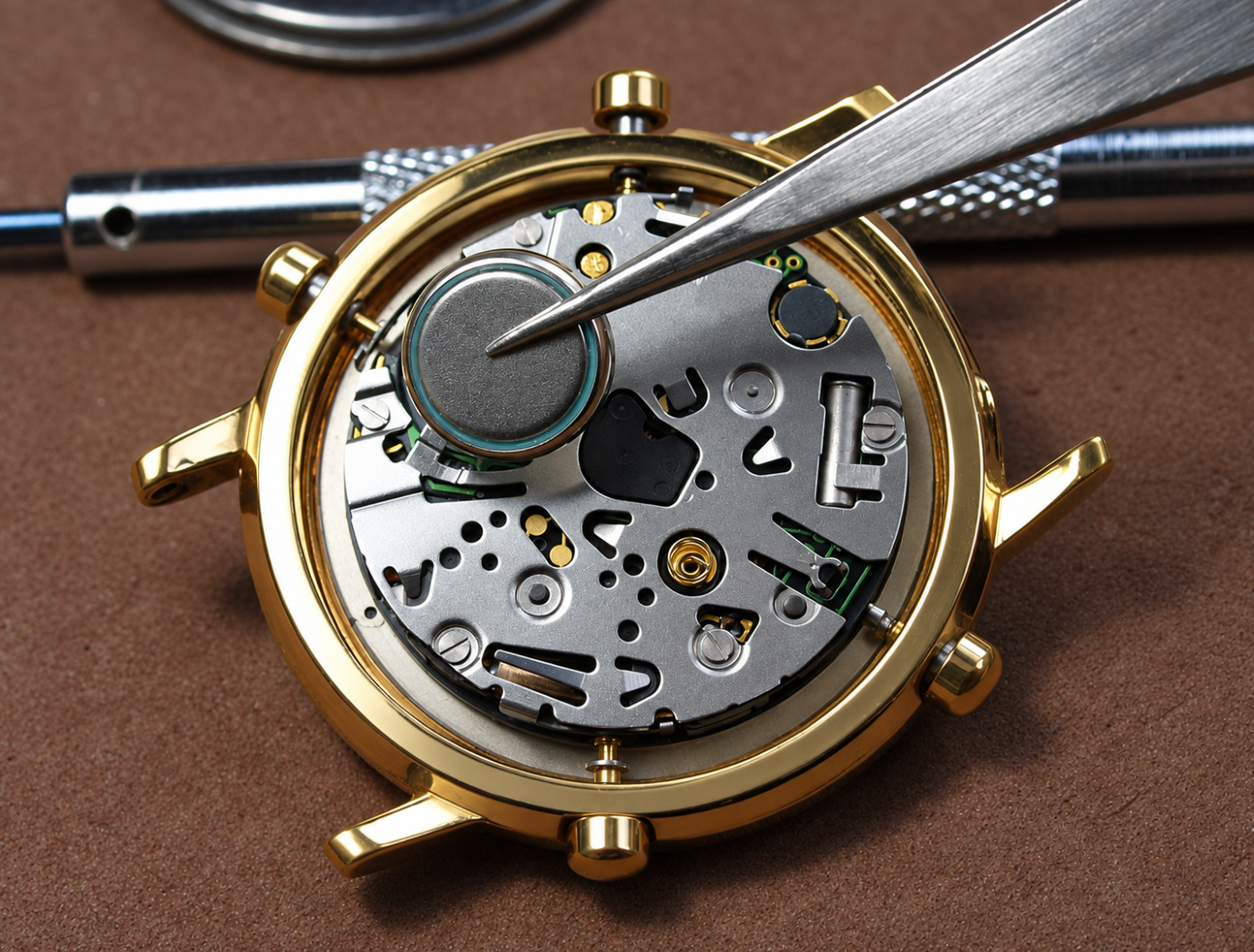
Mechanical watches have fascinated collectors, designers, and engineers for centuries. Unlike quartz timepieces, they operate without batteries, relying entirely on a sophisticated system of springs, gears, and precision components that work together in perfect harmony.
Understanding how a mechanical watch works is essential not only for enthusiasts but also for brands developing their own collections or looking to customize watches: selecting the right caliber is one of the first strategic decisions, as it influences the design, dimensions, performance, and overall quality of the final timepiece.
Every element, from the mainspring to the escapement, plays a crucial role in ensuring accuracy, reliability, and durability.
This guide explores the principles behind the mechanical watch mechanism, explains the difference between manual-winding and automatic movements, and highlights why Swiss watchmaking continues to set the global standard.
What Is a Mechanical Watch? Definition and History
A mechanical watch is a timepiece powered exclusively by mechanical energy stored in a coiled spring known as the mainspring.
Unlike quartz watches, which rely on batteries and electronic circuits, a mechanical watch transforms stored energy into the controlled motion of the hands through an intricate arrangement of gears, wheels and regulating components.
Mechanical watches date back to the early portable clocks of the 16th century and have continuously evolved through centuries of innovation.
Improvements in metallurgy, lubrication, manufacturing tolerances, and precision engineering have transformed early mechanisms into remarkably reliable movements capable of running for decades with proper maintenance.
Switzerland became the center of this evolution, developing a reputation for exceptional craftsmanship and quality that still define the luxury watch industry today.
For modern brands, a mechanical movement is far more than a functional element – it represents engineering excellence, heritage, and enduring value.
How the Internal Mechanism Works
Although every caliber has its own architecture, the operating principles remain remarkably consistent across virtually every mechanical watch.
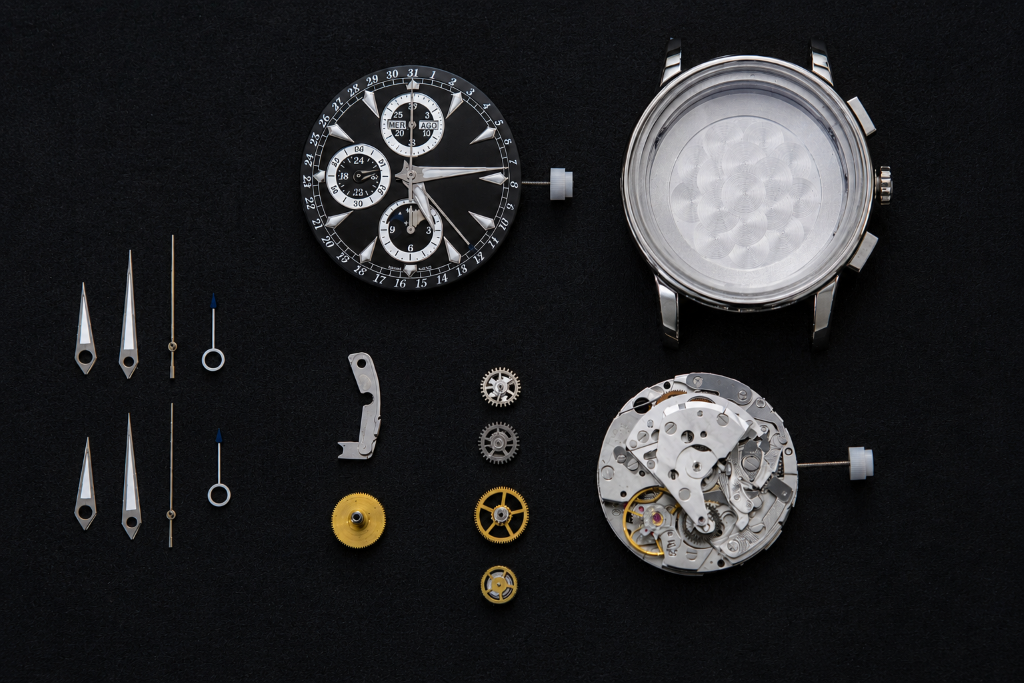
The mainspring: the energy source
Everything begins with the mainspring, which stores the energy needed to power the entire mechanism.
Winding the watch stores potential energy inside this spring. As it gradually unwinds, it releases stored power in a controlled manner that drives every part of the movement.
Modern mainsprings are manufactured from advanced alloys that provide greater elasticity, corrosion resistance, and longer service life than earlier carbon-steel versions. This enables contemporary movements to achieve power reserves ranging from approximately 40 hours to well over 70 hours in premium calibers.
The gear train: transmitting power
The gear train transfers energy from the mainspring to the hands with exceptional precision.
Thanks to the barrel, force is delivered to a carefully engineered sequence of wheels and pinions that distribute power throughout the movement. Each wheel reduces rotational speed while maintaining consistency, ultimately driving the hour, minute, and second hands.
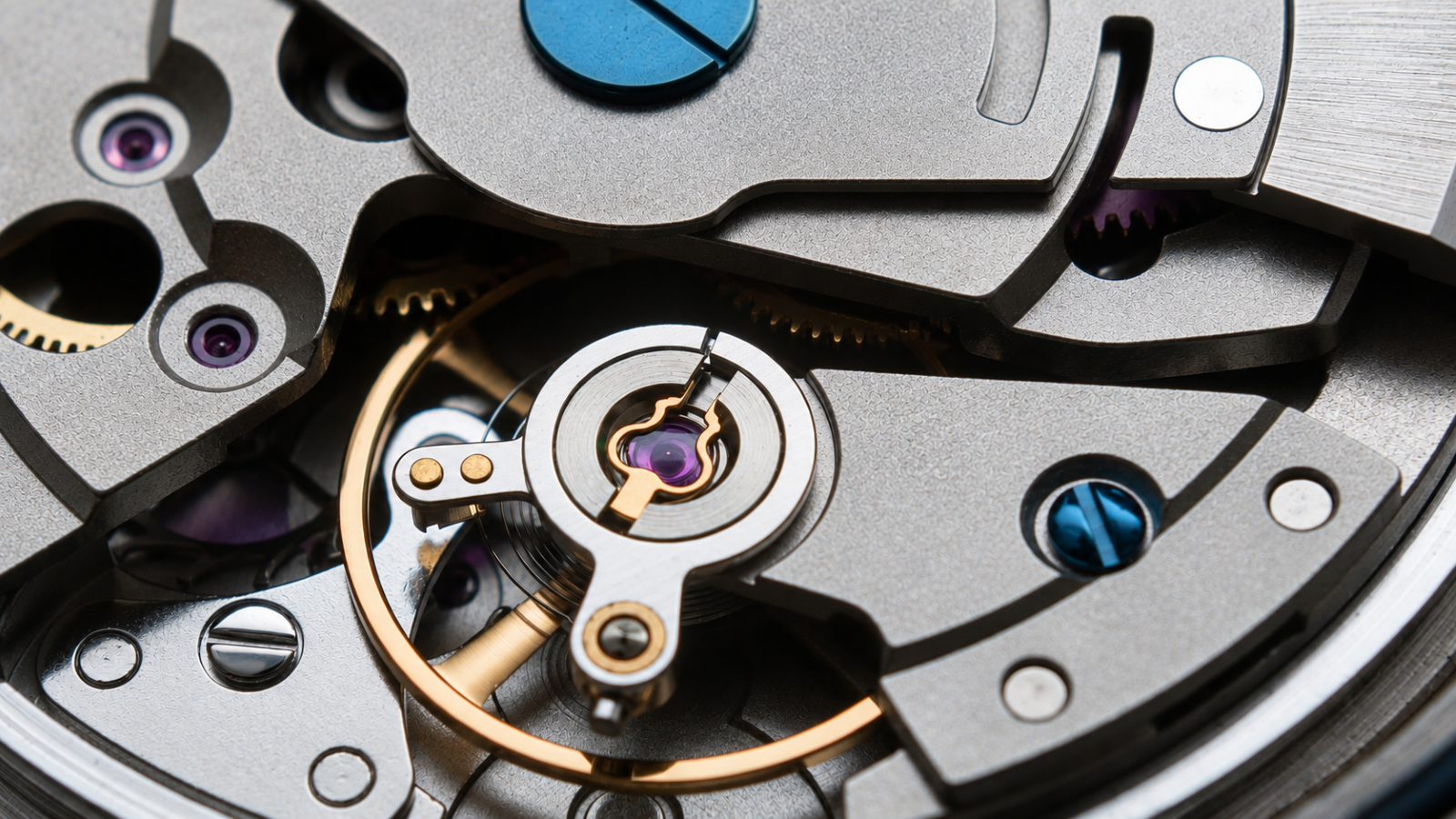
Components are manufactured to microscopic tolerances and typically rotate on synthetic ruby jewels, which significantly reduce friction and wear throughout the life of the movement.
The escapement: regulating time
The escapement releases energy in perfectly measured intervals, making accurate timekeeping possible.
Often described as the heart of the timing system, the escapement prevents the stored energy from being released all at once.
Instead, it delivers controlled impulses that allow the movement to advance with remarkable consistency.
Most modern Swiss watch mechanisms use the Swiss lever escapement because of its efficiency, durability, and accuracy, although specialized systems such as the co-axial escapement have also gained recognition in contemporary horology.
The balance wheel: the watch’s heartbeat
Working together with the escapement is the balance wheel, often referred to as the heartbeat of the watch.
Oscillating thousands of times every hour – commonly at 28’800 vibrations per hour – it regulates the watch’s timekeeping and determines its performance. Each oscillation allows the escapement to advance the gear train by a precisely controlled amount, producing the familiar ticking sound associated with every mechanical watch.
How an automatic watch mechanism winds itself
An automatic movement follows the same operating principles as a traditional manual-winding movement but incorporates an additional component: a rotor.
This semi-circular weight rotates with the natural motion of the wearer’s wrist, transferring energy to the mainspring and keeping the mechanism powered throughout daily use.
As the rotor turns, it gradually rewinds the mainspring, maintaining the power reserve without requiring daily manual winding. Most automatic mechanical watches can also be wound manually through the crown whenever additional energy is needed.
Manual-winding vs. Automatic Watches: What’s the Difference?
The primary difference between manual-winding and automatic watches lies in how the mainspring is wound.
Both belong to the same mechanical watch family and share identical operating principles. A manual-winding watch requires the wearer to wind the crown regularly to keep the mainspring fully tensioned.
Many enthusiasts appreciate this daily ritual because it creates a closer connection with the timepiece.
An automatic watch performs the same function through its oscillating rotor, making it particularly practical for everyday use.
From an engineering perspective, both solutions offer exceptional durability when properly maintained. The choice ultimately depends on personal preference, intended use, and overall design objectives.
Why Choose a Swiss Mechanical Watch
A Swiss mechanical watch represents far more than accurate timekeeping.
Swiss watchmaking has earned its international reputation through centuries of continuous innovation, rigorous quality standards, and exceptional craftsmanship.
Every Swiss caliber combines precision engineering with meticulous manufacturing processes, resulting in outstanding reliability, durability, and long-term performance.
This rich Swiss watchmaking heritage continues to inspire modern horology, blending traditional expertise with advanced technologies to create watches that remain the benchmark for luxury and premium watch brands worldwide.
For companies developing their own collections, selecting a Swiss movement is also a strategic business decision that communicates quality, authenticity, and high-end positioning.
Maintenance and Care of a Mechanical Movement
Even the finest mechanical watch requires regular servicing to preserve its accuracy, reliability, and longevity.
Lubricants gradually deteriorate, microscopic particles accumulate, and moving elements naturally wear over years of operation.
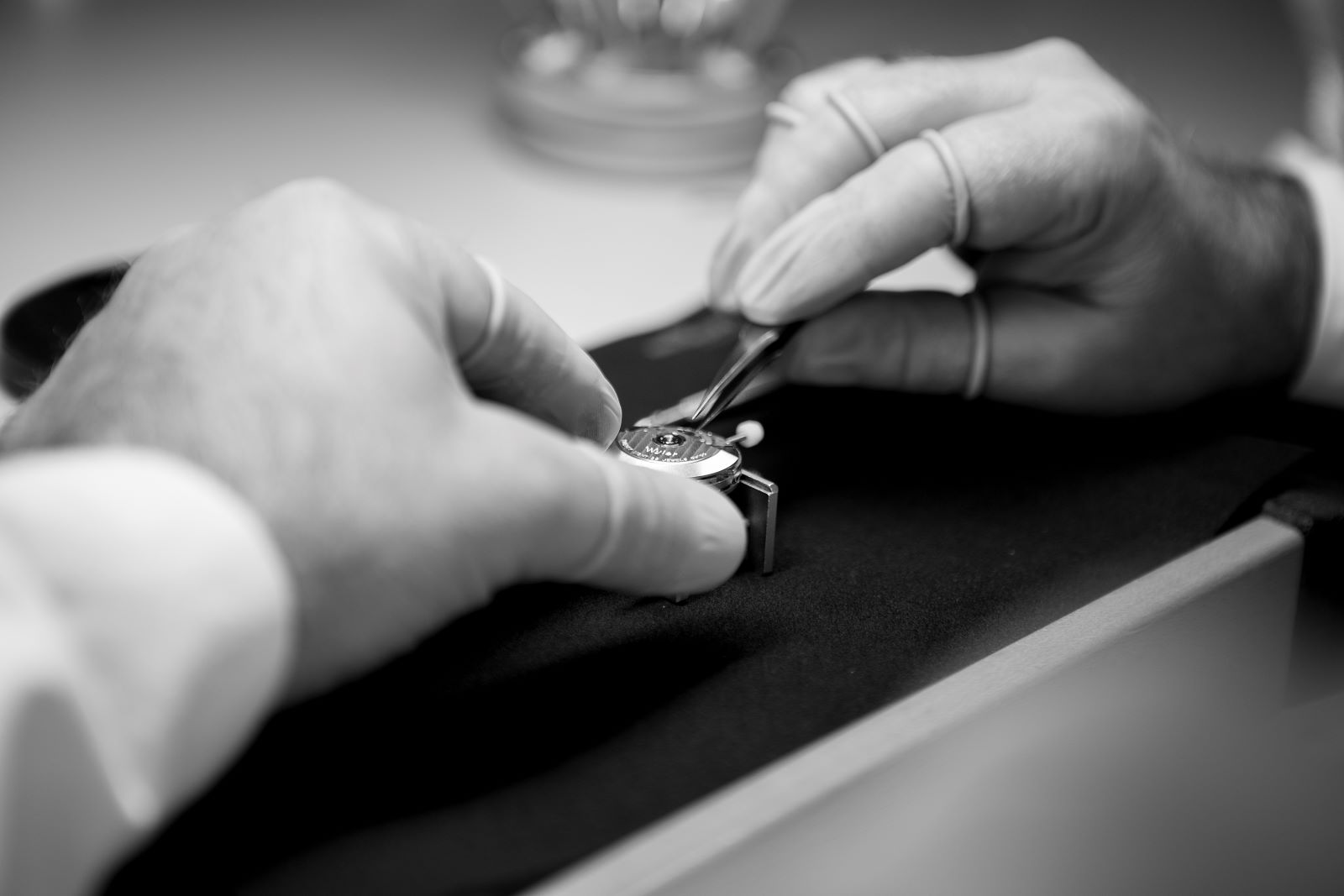
Professional servicing allows experienced watchmakers to completely disassemble the internal mechanism, clean every component, replace worn parts when necessary, apply fresh lubrication, and recalibrate the movement according to manufacturer specifications.
A few simple habits can significantly extend the lifespan of a mechanical watch.
- Avoid exposure to strong magnetic fields.
- Protect the watch from severe impacts.
- Have the water resistance tested periodically.
- Wind manual watches gently without forcing the crown.
- Schedule professional servicing every few years, according to the manufacturer’s recommendations and usage
With proper care, a quality Swiss mechanical movement can deliver reliable performance for generations, becoming not only a precision instrument but also an heirloom that preserves both technical excellence and emotional value.
Mechanical Watch FAQs
How accurate is a mechanical watch?
Mechanical watches are designed to deliver remarkable precision through purely mechanical engineering. Unlike quartz watches, however, small daily variations are normal. Factors such as the movement’s adjustment, temperature, wearing habits, position, and the condition of the lubricants can all influence accuracy by a few seconds per day. Regular servicing helps preserve consistent performance over time.
Can a mechanical watch be overwound?
Modern manual-winding watches are generally designed to prevent damage once the mainspring reaches its maximum tension. Automatic movements also include mechanisms that avoid overwinding while the rotor continues to wind the watch during normal wear.
Why are synthetic ruby jewels used inside a mechanical movement?
Synthetic ruby jewels serve as low-friction bearings for the movement’s rotating components. By minimizing friction and wear, they improve long-term reliability, help maintain accuracy, and extend the service life of the movement.
How does a chronometer differ from a standard mechanical watch?
A chronometer is a mechanical watch whose movement has been independently tested and certified for precision according to strict standards. In fact, not every mechanical watch qualifies as a certified chronometer: this certification provides additional assurance of the movement’s accuracy and consistency.
What affects the lifespan of a mechanical watch?
The lifespan of a mechanical watch depends on the quality of its movement, regular servicing, and proper daily care. When well maintained, a Swiss mechanical movement can remain reliable for decades and often become a timepiece passed down through generations.
Can a Swiss mechanical movement be customized for a watch brand?
Yes. Many Swiss manufacturers can adapt existing calibers or develop customized movement solutions to meet specific design, technical, or branding requirements. This allows watch brands to create distinctive collections while benefiting from proven Swiss engineering, manufacturing expertise, and production reliability.
Conclusion
The beauty of a mechanical watch lies in the perfect balance between engineering and craftsmanship.
Every element – from the mainspring and gear train to the escapement and balance wheel – works together to transform stored energy into precise, continuous motion without relying on electronics.
Whether manual-winding or automatic, every movement reflects centuries of horological innovation and technical expertise.
For designers and brands, understanding these principles is fundamental when developing timepieces that combine outstanding performance, refined aesthetics, and lasting value.
Choosing a Swiss-made caliber means investing in proven reliability, accuracy, and a tradition of excellence that continues to define the highest standards of the watchmaking industry.
Bringing a watch collection to life requires not only outstanding design, but also the right manufacturing partner. With decades of experience and integrated production capabilities, TAN supports brands at every stage – from concept and engineering to industrialization and final assembly. Contact our team to discuss your next watch project.